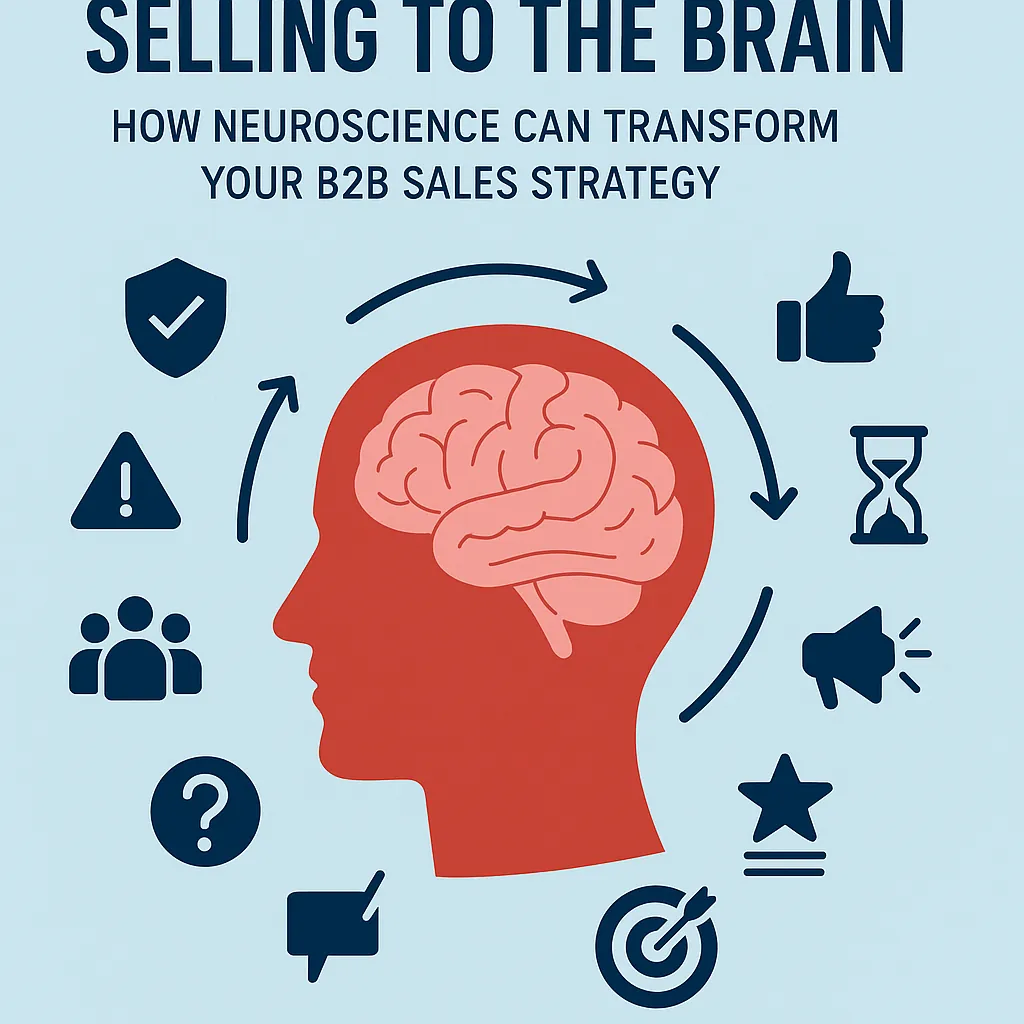
B2B sales isn’t just about logic and ROI anymore. In fact, it never truly was.
Behind every complex deal is a human brain making decisions — driven by emotion, trust, and psychological triggers. The real edge in today’s competitive landscape comes from understanding how buyers think and applying that knowledge to create better, more human sales experiences.
Here’s how to harness insights from neuroscience to speed up your sales cycle, earn trust faster, and close more deals — all while staying ethical and buyer-focused.
Trust is a neurochemical event. When buyers experience consistency, empathy, and honesty, their brains release oxytocin — the hormone that signals safety and bonding — and quiet fear-driven areas like the amygdala.
What to do:
Be predictably reliable: follow through and communicate clearly.
Show you understand their challenges before selling.
Be upfront about what your solution can and can’t do.
These simple behaviors can help buyers feel safe saying “yes.”
People fear losses more than they value gains. This is a deep-seated survival instinct.
How to use it wisely:
Show what buyers might lose by not taking action — wasted time, inefficiency, lost revenue, market position.
Quantify those losses in real terms.
Remind them that standing still often carries greater risk than moving forward.
Urgency built on real-world consequences motivates action.
The human brain is wired to follow others. When buyers see peers or competitors succeed with your solution, they feel more confident following suit.
How to apply it:
Highlight testimonials from similar companies or roles.
Share case studies that include real results.
Offer live references when appropriate.
Social validation reduces friction and accelerates buy-in.
Facts inform, but stories stick. Our brains process narratives across multiple regions — memory, emotion, and imagination — making them far more powerful than data alone.
Ways to leverage storytelling:
Frame your product around a customer’s journey from pain to success.
Use analogies to simplify technical ideas.
Make the buyer the hero, not the product.
Good stories don’t just sell — they connect.
After a big decision, many buyers feel doubt — it’s called buyer’s remorse. You can reduce this emotional backlash by proactively reinforcing their decision.
Best practices:
Talk openly about common concerns and how you address them.
Offer clear onboarding plans, guarantees, and ongoing support.
Provide reassurance during and after the close.
Buyers want to feel they made the right call. Help them believe it.
People naturally trust experts — it’s hardwired. Demonstrating thought leadership and competence increases your influence in the buyer’s mind.
How to show authority:
Share helpful resources, not just sales collateral.
Mention your experience in solving similar problems.
Back your advice with data and real-world outcomes.
Be a trusted advisor, not just a vendor.
The brain responds strongly to scarcity — it perceives limited options as more valuable. Ethical use of this principle can help push deals forward.
Ideas for urgency:
Offer limited-time pricing or bonuses.
Mention limited onboarding capacity.
Invite select clients to exclusive programs or early access initiatives.
Make sure scarcity is real — trust is more important than pressure.
First impressions shape perception. Simple details — like tone, visuals, and your environment — can prime buyers for trust or doubt.
Tips:
Keep sales decks clean and visually appealing.
Ensure a professional digital or physical environment.
Mirror the buyer’s energy and language to create connection.
Subtle cues can drive deep impact.
The more complex a decision feels, the more likely buyers are to stall. Cognitive overload is real — and it kills momentum.
To simplify:
Break ideas into smaller chunks.
Use visuals like charts and infographics.
Emphasize clear, benefit-driven messaging.
Make decisions easier — not harder.
Giving something before asking for anything back creates a sense of goodwill — and buyers feel more inclined to engage with you.
Ways to give first:
Share relevant insights or industry benchmarks.
Offer a free audit or assessment.
Introduce helpful contacts or tools — with no strings attached.
Buyers remember who helped them first — especially when no one else was offering value upfront.
To succeed in modern B2B sales, it’s no longer enough to know your product. You have to know your buyer’s brain — how they feel, think, fear, and decide.
By applying neuroscience-based strategies, you don’t just sell better — you build trust faster, close with integrity, and create long-term relationships based on empathy and understanding.
Want to equip your sales team with these neuroscience-backed techniques?
We run your outbound and book qualified sales calls with decision-makers, so your team can focus on closing.
Get StartedIf you have a general inquiry and would like to speak to our expert team, you can contact us via email at: support@boxbytedigital.com