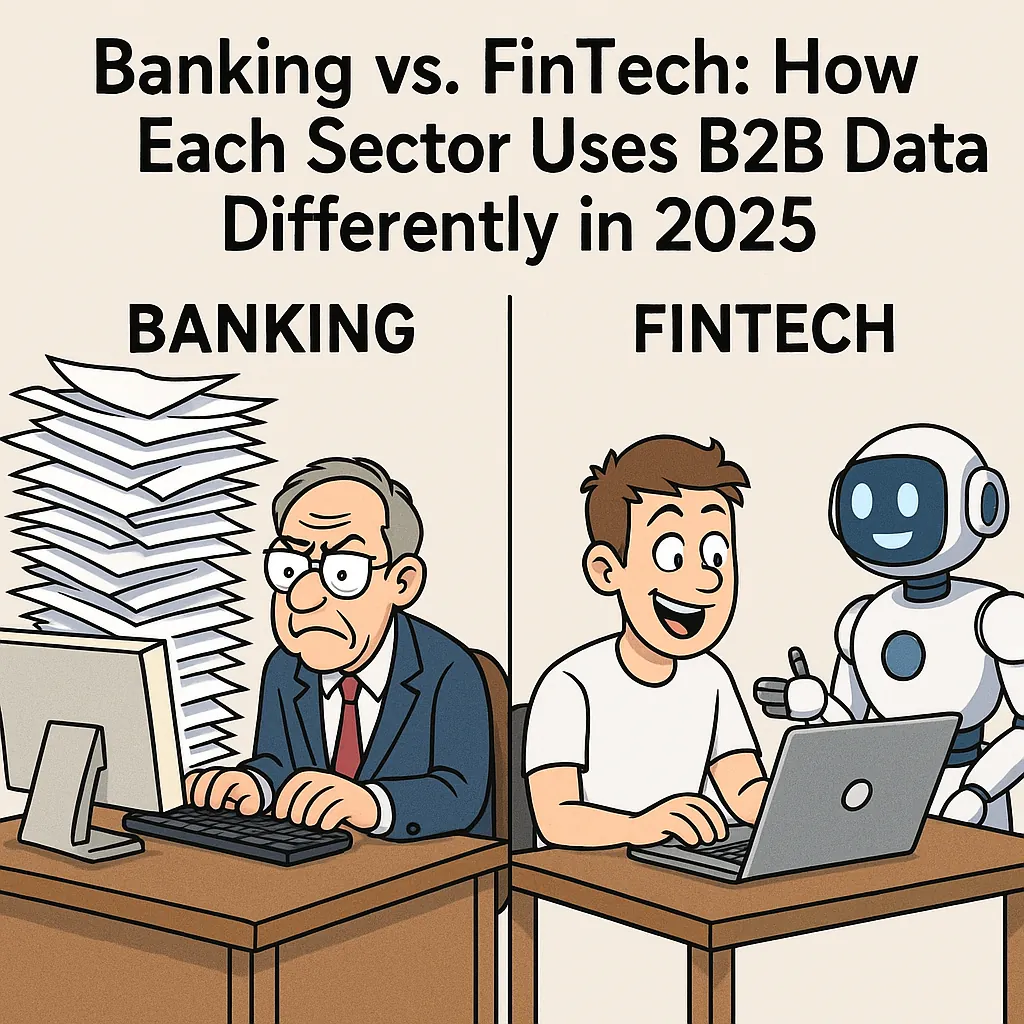
In 2025, B2B data powers nearly every major decision in the financial world. Whether you’re a legacy bank or a digital-first FinTech, business data is essential for smarter marketing, better client relationships, and stronger compliance. But while both sectors rely on the same core resource, their approaches couldn’t be more different.
Traditional banks are slowly modernizing how they use data, while FinTechs are leveraging automation and AI to move faster and smarter. The key to success? High-quality, up-to-date, and industry-specific data.
B2B data refers to business-specific information used for targeting, sales, and compliance. It includes:
Company attributes: size, location, industry
Decision-maker contacts: direct emails and phone numbers
Technology stack and usage behavior
Signals of purchase intent and engagement
Financial institutions use this data to tailor their outreach, personalize offerings, and ensure regulatory compliance.
Banks, historically reliant on in-person relationships and manual processes, are now integrating digital data into their operations.
Client Segmentation Banks use structured data to categorize business clients by size, sector, and need—enabling personalized outreach.
Compliance and Risk Management Quality data supports credit risk assessment, fraud detection, and regulatory reporting.
Targeted Outreach With curated contact lists, banks can deliver timely campaigns to the right business audience.
Cross-Selling Products Analyzing client behavior helps banks offer relevant services, like business loans or treasury tools.
FinTech companies, built for agility, lean heavily on real-time data and automation to fuel growth.
High-Volume Outreach They use enriched business contacts to reach leads at scale with hyper-targeted messaging.
AI-Driven Targeting Data powers algorithms that score leads, recommend products, and personalize offers instantly.
Rapid Campaign Testing Real-time metrics—like open rates and clicks—help FinTechs test, learn, and optimize quickly.
Omnichannel Strategies They run integrated campaigns across email, SMS, and digital ads using consistent data inputs.
Regardless of strategy, the quality of your data defines the success of your outreach. Accurate, verified B2B data enables:
Precise targeting
Higher conversion rates
Fewer bounced emails and spam issues
Full compliance with regulations like GDPR and CCPA
Whether you’re a financial institution or a startup, clean, ready-to-use B2B data can transform your marketing and sales efforts. A strong provider offers:
Custom Email Lists segmented by industry, role, revenue, and geography
Verified Contact Info with decision-maker emails and phone numbers
Data Enrichment to clean and enhance outdated CRM entries
Niche Segments targeting industries like lending, investment, and insurance
Data should be ethically sourced, regularly validated, and delivered in a format that integrates easily into CRMs and marketing platforms.
Privacy-First Marketing Compliance with data laws is now a top priority across all financial outreach.
Intent-Based Targeting Businesses are prioritizing leads based on behavior and purchase readiness.
Attribution and Optimization Better data helps marketers understand what’s working across the customer journey.
CRM and Tool Integration The best data isn’t just accurate—it’s also easy to use with your tech stack.
B2B data isn’t just a nice-to-have in 2025—it’s the foundation of successful financial marketing. Banks use it to strengthen relationships and meet regulatory standards. FinTechs use it to scale quickly and innovate. But both share one common need: reliable, accurate, and actionable business data.
Access to the right B2B contact database can be the difference between growth and stagnation. Whether you’re building a campaign, refining your CRM, or launching a new service, success starts with the data behind it.
We run your outbound and book qualified sales calls with decision-makers, so your team can focus on closing.
Get StartedIf you have a general inquiry and would like to speak to our expert team, you can contact us via email at: support@boxbytedigital.com