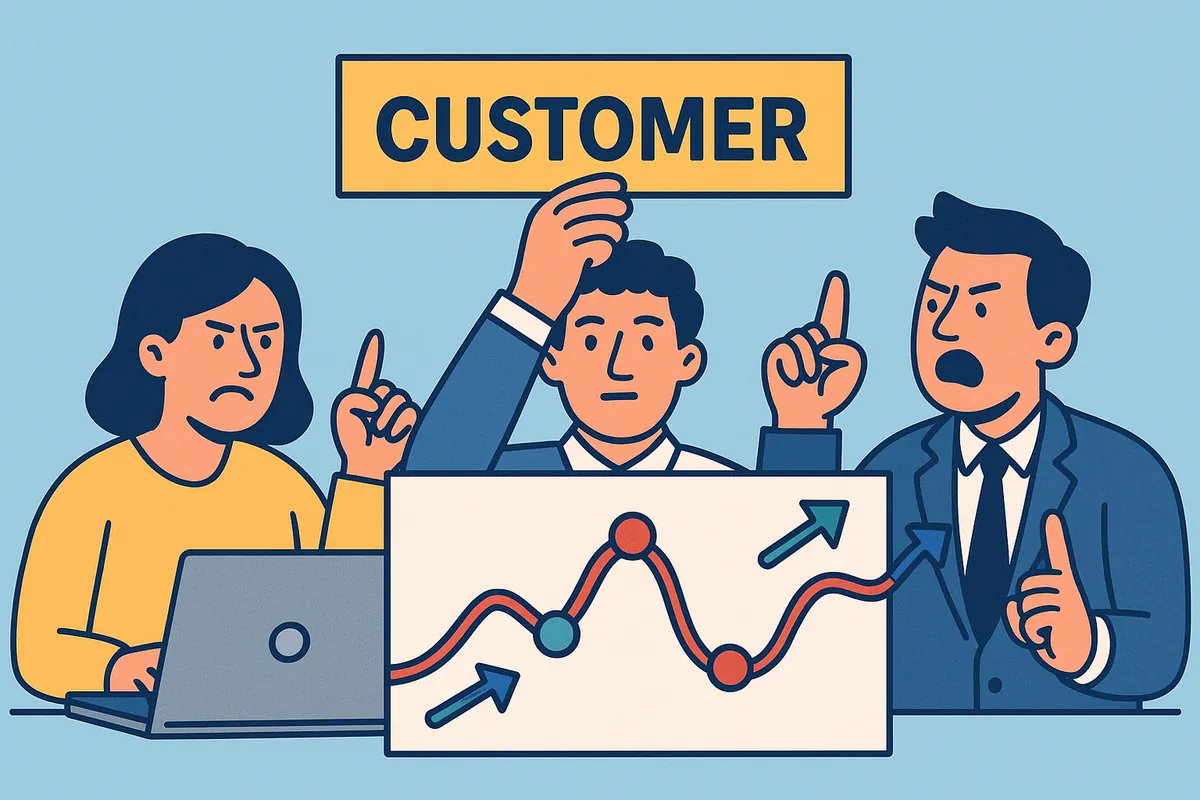
We’ve all done it.
Moved a lead from “sales-sourced” to “marketing-sourced” because, well, they did attend that webinar a year ago… or maybe they downloaded a whitepaper in 2023… or liked one of our LinkedIn posts at some point. That’s got to count for something, right?
It’s not deception — it’s survival.
Attribution is the currency of internal politics. It justifies headcount, budgets, promotions, and quarterly wins. So of course we try to claim our share. Marketing wants credit for generating leads. Sales wants credit for converting them. And RevOps? They just want to make it through Friday without building another last-minute custom report.
The real issue is that attribution models don’t reflect how buyers actually make decisions.
Buyers don’t move through funnels like trains on tracks. They zigzag. They ghost. They reappear months later. They browse, listen, ignore, return, and finally — maybe — they raise a hand.
In a typical journey, someone might:
See an ad they don’t click
Catch a podcast episode on a walk
Skim a few social posts
Ask peers in a private Slack group
Read a blog post three months later
Respond to a “cold” outreach message when timing finally clicks
And what does your CRM say? “Outbound-sourced.” Because that’s what was trackable.
In truth? That deal was influenced by five different touchpoints over six months. But our attribution model gives credit to the last one in the door — or the first, depending on your system. Either way, it flattens a complex, human journey into a single checkbox.
Sure, multi-touch attribution is a step up from first-touch or last-touch. It spreads credit across the funnel. But it still relies on visible, trackable interactions.
It still assumes a logical path from awareness to purchase — as if buyers are working through a checklist on your website. What about:
The influencer shoutout they heard on a Twitter Space
The industry thread on Reddit they never liked or commented on
The coworker who mentioned your product in passing over lunch
None of that shows up in your data. But all of it shapes decisions.
Attribution models treat humans like spreadsheets. And then we wonder why they don’t capture reality.
Here’s the bigger problem: the way we talk about attribution drives misalignment.
Instead of being a tool for insight, it becomes a competition. Sales vs. marketing. BDR vs. content. Teams scrambling to “own” pipeline instead of working together to understand what actually influenced the buyer.
This mindset breaks collaboration. It creates internal silos and leads to teams chasing metrics instead of impact.
But what if we flipped the question?
Not: “Who gets credit for this deal?” Instead: “What actually helped this person make a decision?”
That one shift turns attribution into something useful — a diagnostic tool to learn what’s resonating, what’s not, and where we should invest more.
Buyers don’t care who generated the lead. They care about value.
They don’t care if it was a sales call, a podcast, or an Instagram post that brought them in. They care about whether your product solves their problem.
So maybe it’s time we stop fighting over slices of the pie and start focusing on the one number that actually matters: revenue.
One pipeline.
One team.
One shared goal.
The buyer isn’t linear. The process isn’t clean. Attribution isn’t perfect. But when teams align around customer value instead of internal credit, everything works better.
Attribution can still help. It’s not broken — it’s just not the ultimate truth we treat it as.
Used well, it can show patterns. Guide decision-making. Spark smart investments. But only if we stop obsessing over it as a scoreboard.
Because buyers don’t care who wins that internal game.
They care about experience. They care about clarity. They care about whether you help them or waste their time.
Let’s stop using attribution to claim credit — and start using it to serve the customer better
We run your outbound and book qualified sales calls with decision-makers, so your team can focus on closing.
Get StartedIf you have a general inquiry and would like to speak to our expert team, you can contact us via email at: support@boxbytedigital.com